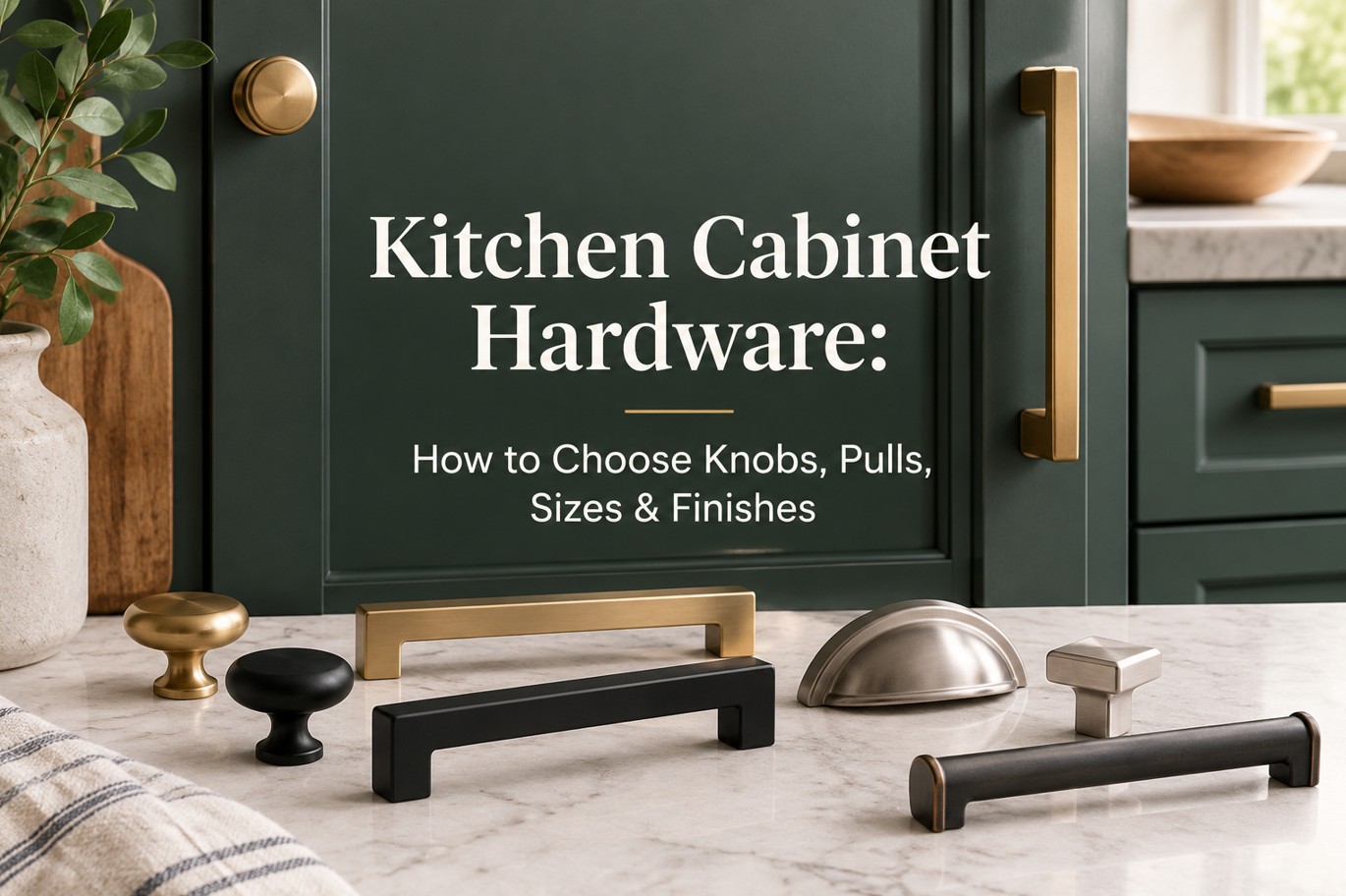
Kitchen cabinet hardware may be one of the smallest decisions in a remodel, but it has an outsized effect on how the room looks and works. The right knobs and pulls make cabinets comfortable to use, reinforce the design style, and connect cabinetry with faucets, lighting, and appliances. The wrong size or placement can make beautifully made cabinets feel unfinished.
This guide to kitchen cabinet hardware explains how to choose knobs versus pulls, select practical sizes, place hardware on doors and drawers, coordinate finishes, and plan installation before cabinetry arrives. It is designed for homeowners in the United States and Canada who want a cohesive result without guesswork.

Kitchen Cabinet Hardware: The Quick Guide
- Knobs: a classic, compact option for doors and smaller drawers.
- Pulls: provide a larger gripping area and a streamlined look, especially on wide drawers.
- Mixed hardware: works when shapes, finish family, and design language are coordinated.
- Finish: choose it alongside faucets, lighting, and appliances—not in isolation.
- Placement: test full-size templates before drilling custom cabinetry.
Knobs vs. Pulls: Which Is Better?
Neither option is universally better. Knobs create a traditional point of detail; pulls form a longer line that can emphasize cabinet proportions. A common practical combination is knobs on doors and pulls on drawers, but using pulls throughout can create a consistent contemporary line. Try the hardware on a sample door and drawer before committing.
| Feature | Knobs | Pulls |
|---|---|---|
| Visual effect | Compact, classic, decorative | Linear, tailored, modern or traditional |
| Best use | Doors and small drawers | Wide drawers, heavy drawers, tall pantry doors |
| Grip | One-point grip | More grip positions, depending on shape |
| Style flexibility | Classic and transitional cabinetry | Minimal, sculptural, and traditional styles |
How to Choose the Right Hardware Size
Hardware should feel proportional to the cabinet front and comfortable in the hand. Very short pulls can look undersized on wide drawers; oversized pulls can overwhelm narrow doors or detailed profiles. Compare products against actual cabinet fronts rather than relying on a catalog photo.
| Cabinet front | Starting point | What to check |
|---|---|---|
| Small cabinet door | Small knob or compact pull | Finger clearance and door profile |
| Standard drawer | Medium pull or centered knob | Comfort and visual balance |
| Wide pot-and-pan drawer | Longer pull or two coordinated pulls | Drawer width, load, and even placement |
| Tall pantry door | Long pull or vertical handle | Reach, leverage, and door weight |
| Handleless front | Recessed channel or push-latch system | Opening effort and compatibility |
Measure a pull by its center-to-center distance—the distance between screw holes—not only by its overall length. Confirm the manufacturer’s dimensions and screw requirements before ordering. Wide drawers may benefit from a longer pull or a pair of pulls, depending on drawer construction and user comfort.
Where Should Knobs and Pulls Go?
Cabinet doors
Knobs are commonly placed near the corner opposite the hinges. Pulls are often installed vertically near the opening edge. Exact placement varies with door height, overlay, frame style, and hardware design. Align similar doors consistently and check clearance from adjacent doors, walls, and appliances.
Drawers
A single pull is often centered horizontally on the drawer front. On very wide or heavy drawers, two pulls can distribute the grip and reinforce symmetry. Keep placement aligned across a run of stacked drawers unless a deliberate design exception is needed.
Tall pantry doors and appliance panels
Tall doors need special attention to reach and leverage. A vertical pull may be easier to grasp, but it should not obstruct appliances or walkways. Integrated appliance panels may require manufacturer-specific hardware and reinforcement; confirm specifications before drilling.
Cabinet door profile affects how hardware sits and reads visually. Review the door style and handle together before finalizing the layout.
Choose a Finish That Works With the Whole Kitchen
Popular finishes include brushed nickel, polished chrome, stainless steel, matte black, brass tones, and bronze. Finish names do not guarantee an exact match: products called “brushed brass” can vary by brand. Compare physical samples beside the faucet, lighting, appliances, countertop, and cabinet finish.
| Finish family | Typical effect | Pairs well with | Planning note |
|---|---|---|---|
| Brushed nickel | Quiet, versatile, soft metallic | White, greige, oak, gray stone | Compare undertones with the faucet |
| Matte black | Graphic contrast, modern definition | Light cabinets, oak, white stone | Some coatings reveal oils or dust |
| Brass / warm gold | Warmth, classic or luxe accent | Walnut, cream, navy, green | Check brushed, polished, and aged versions |
| Polished chrome | Bright and reflective | Cool whites, contemporary kitchens | Water marks may be more visible |
| Bronze | Deep, warm, traditional | Warm woods and earthy neutrals | Color varies substantially by maker |
Matching every metal exactly is not mandatory. A kitchen can combine finishes successfully when each has a clear role and the undertones remain compatible. Too many unrelated metals can make a compact palette feel accidental.
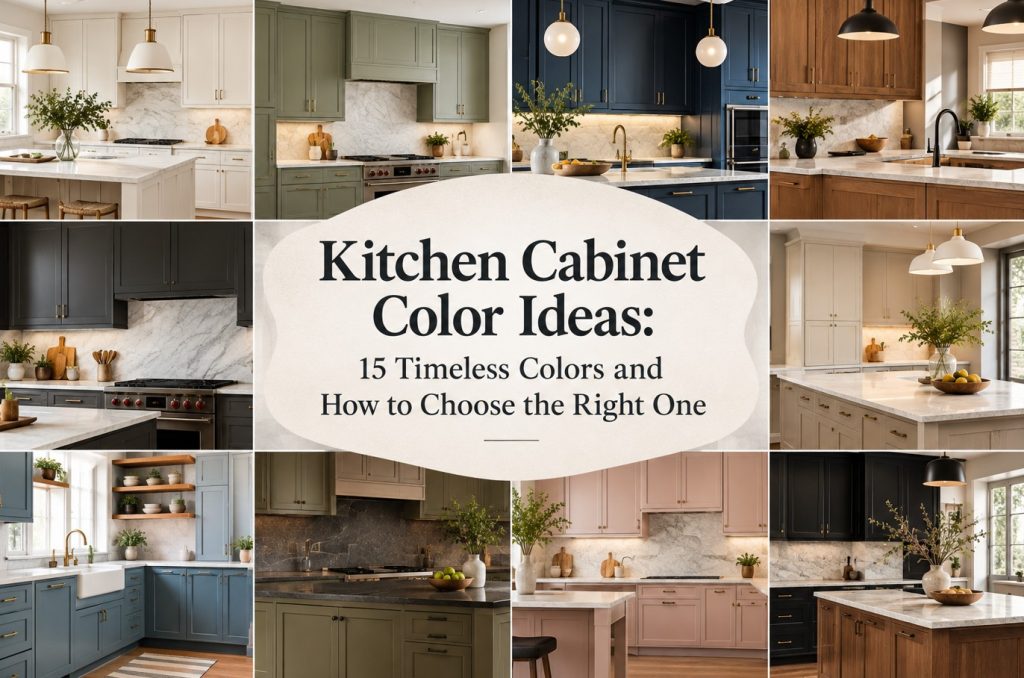
Cabinet color also changes how hardware reads. Use this guide to compare colors with the rest of your kitchen palette.
Hardware for Shaker, Slab, Inset, and Custom Cabinets
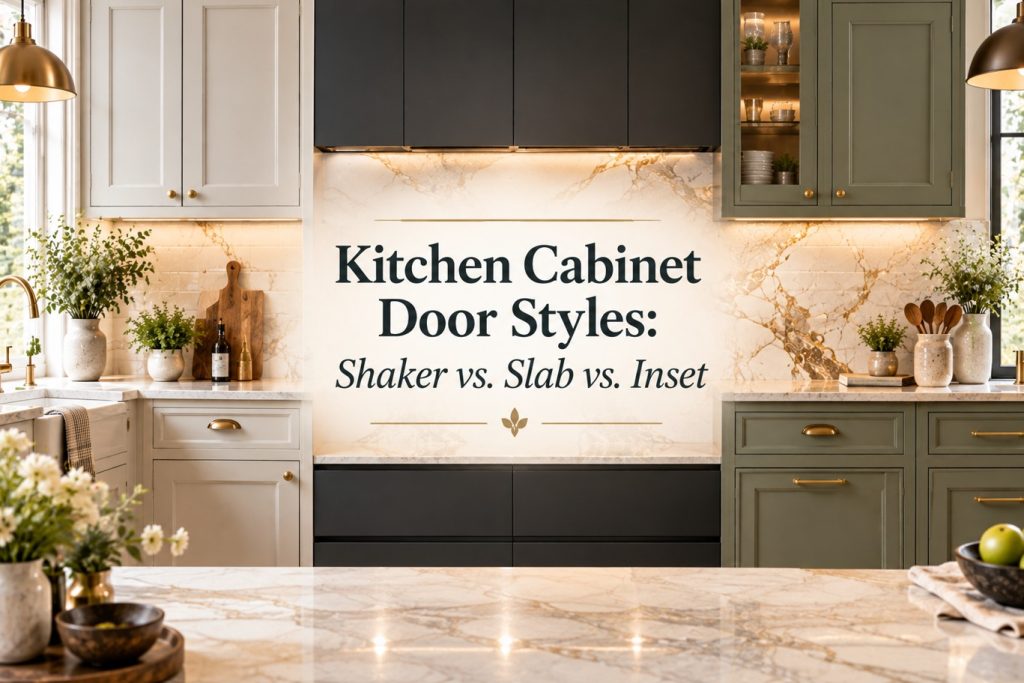
Shaker doors suit classic knobs, cup pulls, and bar pulls. Slab fronts often pair well with simple bars, edge pulls, or sculptural hardware. Inset cabinetry needs extra attention to projection and clearance because the door sits within the frame. Ornate hardware may complement traditional cabinetry but compete with a minimal slab-front design.
For custom cabinetry, ask the cabinetmaker to confirm door thickness, overlay or inset details, drawer-box construction, and screw length. A beautiful pull is not a good fit if the fasteners are wrong or it interferes with an adjacent front.

Comfort, Accessibility, and Everyday Use
Choose hardware that feels comfortable for the people who use the kitchen most. A very small knob may be difficult for someone with limited hand strength; a pull with enough space behind it can be easier to grasp. Avoid sharp edges and pinch points. If accessibility is a priority, test the exact product in person and consult a qualified professional for individual needs.
Think about clearances too: pulls should not hit adjacent appliances, obstruct a narrow passage, or catch clothing. In a busy family kitchen, easy cleaning and a secure grip may matter more than a decorative shape.
Installation Checklist Before Drilling
- Confirm finish, dimensions, center-to-center measurement, and screw specification.
- Make a full-size template and test it on sample doors and drawers.
- Check that doors, pull-outs, appliances, and walls clear one another when open.
- Confirm placement on left- and right-hinged doors before mirroring the pattern.
- Match screw length to actual door or drawer-front thickness.
- Keep a spare piece and product details for future replacement.
Plan hardware alongside task lighting, counters, and cabinet finishes. The kitchen lighting design guide can help you coordinate metal finishes and lighting in the same space.

Common Kitchen Cabinet Hardware Mistakes
- Choosing from a tiny online image: order a sample when possible and assess its scale in person.
- Ignoring center-to-center measurements: overall length does not tell you whether screw holes will align.
- Using one size everywhere without testing: doors, drawers, and pantry fronts have different proportions.
- Mixing finishes without a plan: choose a dominant metal and a limited supporting palette.
- Drilling before confirming the template: misplaced holes are difficult to hide on finished fronts.
- Forgetting maintenance: cleaning needs and coating durability vary by product.
Frequently Asked Questions About Kitchen Cabinet Hardware
1. Are knobs or pulls better for kitchen cabinets?
Both can work. Knobs offer a compact, classic look, while pulls provide more gripping area and may be easier on wide or heavy drawers. Choose based on comfort, proportions, and style.
2. Should kitchen cabinet hardware match the faucet?
It does not have to match exactly. Coordinated undertones and a deliberate finish plan matter more than buying every metal from one finish family. Compare real samples because finishes vary by maker.
3. What size pulls should I use on kitchen drawers?
Choose a size that looks proportional and feels comfortable, then verify the center-to-center measurement and screw requirements. Wider drawers may suit longer pulls or two pulls, depending on construction and use.
4. Can I mix knobs and pulls in one kitchen?
Yes. Knobs on doors and pulls on drawers is a common combination. Keep shapes and finishes related, and test them on sample fronts before ordering.
5. What cabinet hardware finish is most timeless?
Brushed nickel, understated stainless steel, classic brass tones, and simple matte finishes can all age well when they suit the palette. Prioritize quality, comfort, and coordination over trend claims.
6. Is matte black cabinet hardware hard to keep clean?
It depends on coating, texture, and use. Some matte finishes reveal fingerprints or dust. Follow the manufacturer’s cleaning instructions and avoid abrasive products unless approved.
7. Where should knobs be placed on cabinet doors?
They are commonly placed near the corner opposite the hinges, but exact placement depends on door dimensions, style, and user reach. Use a template and check neighboring doors before drilling.
8. Are long pulls better for large drawers?
Longer pulls can provide more leverage and look proportional on wide fronts. Two pulls may also work. Confirm that construction supports the hardware and placement is comfortable.
9. What hardware works best with Shaker cabinets?
Shaker cabinets are versatile: simple bar pulls, classic knobs, cup pulls, and understated traditional designs can all work. Check that the hardware does not crowd the door frame.
10. Should cabinet hardware be installed before or after countertops?
Approve the hardware and template early, then coordinate drilling with the cabinet installer after final fronts and clearances are confirmed. Agree on sequencing to avoid damage and alignment errors.
Final Thoughts
The best kitchen cabinet hardware balances appearance, comfort, scale, and durability. Decide whether knobs, pulls, or a deliberate mix suits the cabinets, then compare sizes and finishes against real samples. Before drilling, approve a full-size template and confirm all clearances.