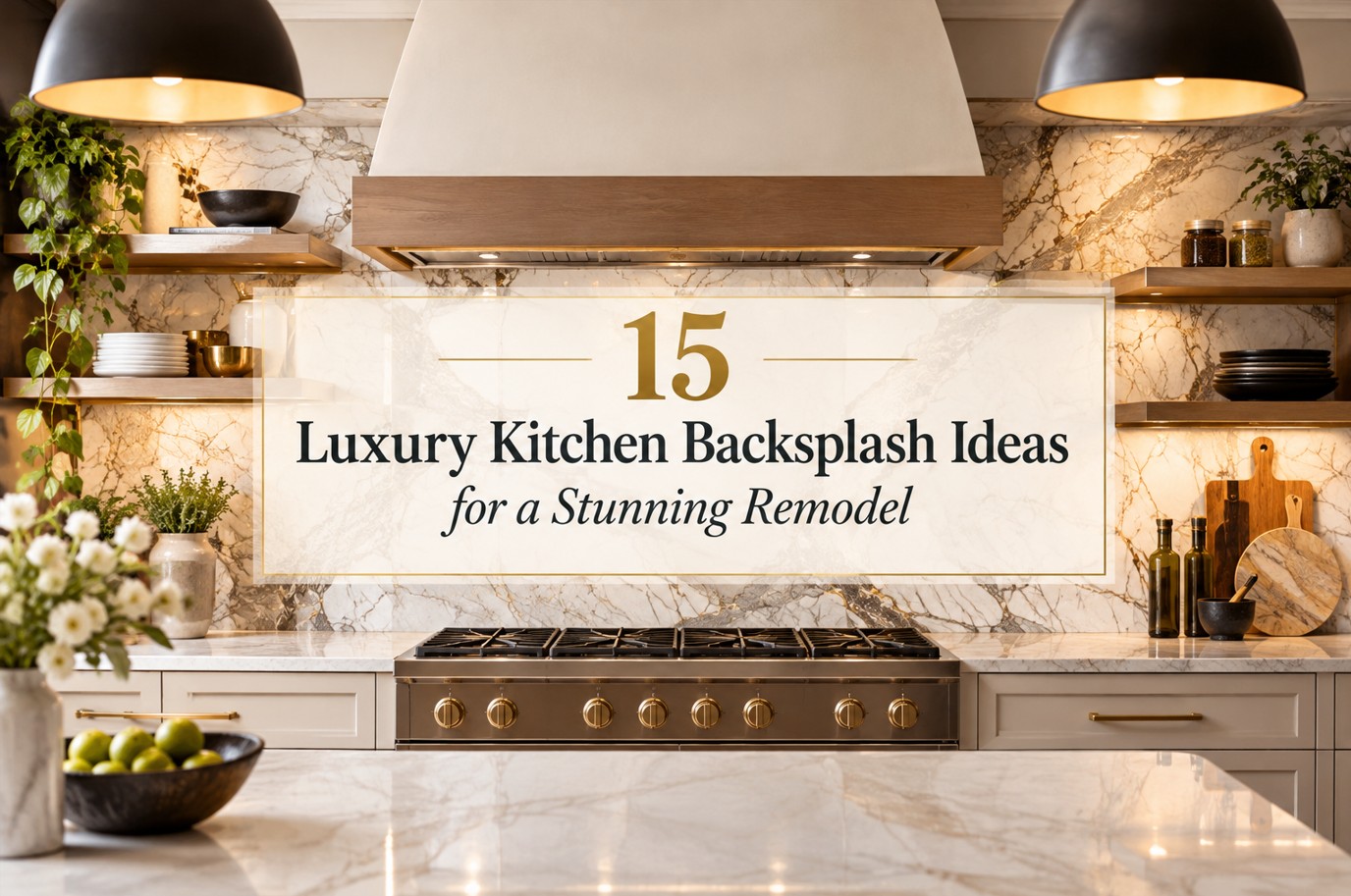
15 Luxury Kitchen Backsplash Ideas for a Stunning Remodel
A kitchen backsplash can do much more than protect the wall behind your stove or sink. The right material, color, and layout can define the entire kitchen, connect different finishes, and make an ordinary remodel feel thoughtfully designed.
In luxury kitchens, backsplashes often become a focal point. Natural stone introduces texture and character, large-format porcelain creates a clean architectural look, and carefully selected tiles add depth without overwhelming the room.
Whether you are planning a complete kitchen renovation or updating an existing space, these 15 luxury kitchen backsplash ideas can help you choose a design that balances beauty, functionality, and long-term appeal.
1- Full-Height Marble Backsplash
A full-height marble backsplash creates a dramatic, seamless appearance by extending the stone from the countertop toward the upper cabinets or ceiling.
Unlike a short backsplash, a full-height installation allows the natural veining to become part of the room’s architecture. White marble with soft gray veins works beautifully in bright, contemporary kitchens, while warmer varieties complement natural wood and brass finishes.
Design tip: If you choose a highly patterned marble, keep nearby finishes relatively restrained so the stone remains the main feature.
2- Bookmatched Natural Stone
Bookmatching involves placing two stone slabs next to each other so their veins create a mirrored pattern. The result can resemble a natural work of art behind a cooktop or along a prominent kitchen wall.
This approach works especially well in larger kitchens where the stone has enough uninterrupted space to be appreciated.
For a balanced design, pair bookmatched stone with understated cabinet fronts and minimal hardware.
3- Quartz Backsplash for a Clean, Modern Look
Quartz backsplashes appeal to homeowners who want a consistent appearance with their countertops. Because engineered quartz is available in many colors and patterns, it can suit both minimalist and transitional kitchen designs.
A matching countertop and backsplash can visually simplify the space, especially when paired with handleless cabinetry and integrated appliances.
Before selecting a product, confirm its heat limitations and the manufacturer’s installation recommendations, particularly around cooktops.
4- Warm Neutral Tiles
Cream, beige, sand, and warm-white tiles create a welcoming alternative to stark white surfaces. These shades work particularly well with oak cabinets, warm wood flooring, brushed brass hardware, and natural stone countertops.
For a more sophisticated result, combine subtle tonal variation with a simple layout such as a stacked pattern or classic running bond.
Warm neutrals are also a useful choice if you want the kitchen to feel inviting without committing to a strong accent color.
5- Large-Format Porcelain Slabs
Large-format porcelain can deliver the visual effect of marble, limestone, or concrete with fewer visible joints than traditional tile installations.
This makes it a compelling option for contemporary kitchens that emphasize clean lines and uninterrupted surfaces.
Porcelain comes in a wide range of finishes, including stone-inspired patterns and restrained matte textures. Ask your fabricator about slab dimensions, edge details, installation requirements, and the suitability of the selected product for your intended application.
6- Handmade Zellige Tiles
Zellige-inspired tiles bring irregular surfaces, subtle color variations, and reflections that change throughout the day. Their handcrafted appearance can soften kitchens dominated by straight lines and smooth cabinet fronts.
White and ivory tiles create a quiet, textured backdrop, while deep green, blue, or earthy brown can introduce more personality.
The beauty of this style lies in its variation, so choose grout and tile placement carefully to preserve the intended effect.
7- Classic Subway Tile With a Modern Twist
Subway tile remains versatile because it can look traditional, contemporary, or luxurious depending on its proportions, finish, grout, and installation pattern.
For a more distinctive result, consider elongated tiles, vertical stacking, contrasting grout, or a glossy finish that reflects light.
The key is to make the familiar format feel intentional rather than treating it as a default choice.
8- Dramatic Black Backsplash
A black backsplash can create depth and contrast, especially against white, cream, or light oak cabinetry.
Polished black stone introduces reflections and a formal atmosphere, while honed or matte finishes create a quieter, more architectural effect.
Lighting is particularly important with dark surfaces. Under-cabinet lighting can reveal texture and make the work surface more practical without sacrificing the dramatic aesthetic.
9- Natural Stone With Earthy Colors
Not every luxury kitchen needs bright white marble. Travertine-inspired finishes, warm limestone, and stones with brown, taupe, or muted green tones can create a more organic atmosphere.
These materials work well alongside natural wood, textured plaster, and understated metal finishes.
If you are aiming for a timeless kitchen, focus on how the stone coordinates with the cabinets and countertop instead of choosing each finish independently.
10- Vertical Tile Layouts
Installing rectangular tiles vertically can make a backsplash feel taller and more contemporary. This arrangement works particularly well between a countertop and upper cabinets, where vertical lines can introduce visual movement.
A vertical stack also pairs naturally with minimalist cabinet doors and simple hardware.
For narrow kitchens, the effect should be considered alongside cabinet proportions and lighting rather than relied on as a guaranteed way to make the room appear larger.
11- Contrasting Grout for Architectural Definition
Grout color can dramatically change the appearance of a tiled backsplash. Matching grout creates a more continuous surface, while contrasting grout emphasizes the geometry of each tile.
Dark grout with light tiles creates a graphic, structured look. A closely matched grout color feels softer and less busy.
Consider maintenance as well as appearance: grout products vary in stain resistance and cleaning requirements, so select the material according to the kitchen’s use.
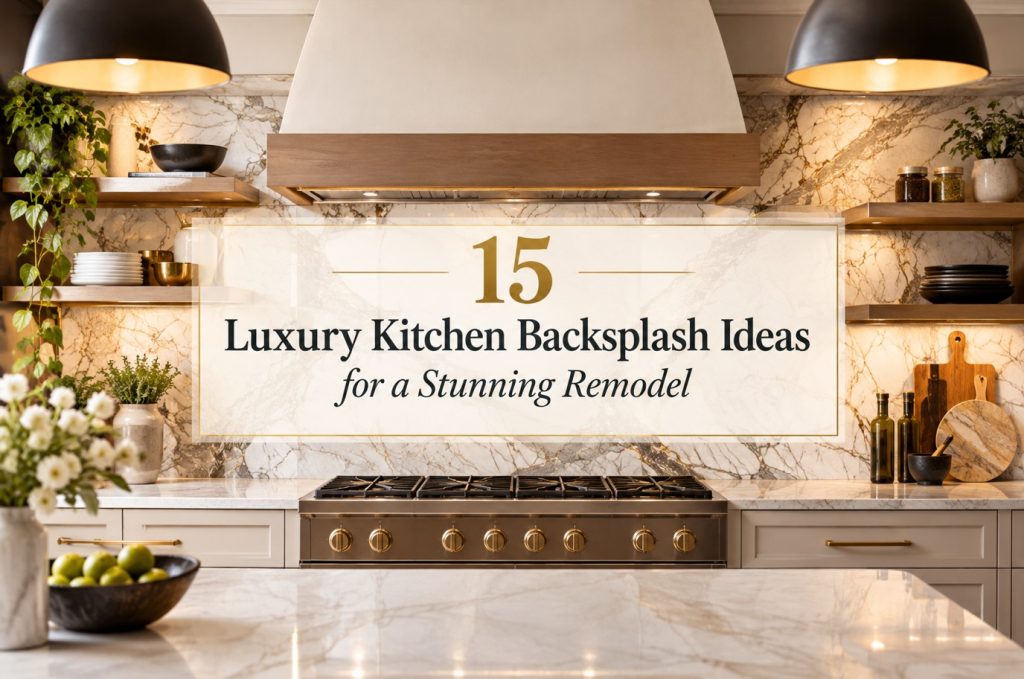
12- Metallic Accents and Reflective Finishes
Metallic tiles and reflective finishes can introduce subtle glamour without requiring an elaborate pattern across the entire wall.
Brushed brass, bronze, or stainless-steel details may work well when coordinated with cabinet hardware, faucets, and lighting fixtures.
Rather than mixing many competing metals, choose a clear design direction and repeat the selected finish in a few carefully placed details.
13- Colorful Backsplash Tiles
A backsplash is an opportunity to introduce color without committing to brightly colored cabinets or walls.
Muted sage green, deep navy, terracotta, and soft blue can all work in a luxury kitchen when the surrounding materials are chosen thoughtfully.
For a balanced composition, repeat one color elsewhere in the room through accessories, seating, lighting, or cabinetry. This helps the backsplash feel connected to the overall design.
14- Minimalist Backsplash With Matching Countertops
Using the same material for the countertop and backsplash creates visual continuity. It is especially effective in kitchens where the design emphasizes clean surfaces, integrated appliances, and carefully proportioned cabinetry.
The result can make a kitchen feel calmer because fewer materials compete for attention.
However, a minimalist approach still depends on detail. The edge profile, seams, transitions, and alignment with cabinets should all be planned before installation.
15- A Statement Backsplash Behind the Range
The area behind the range is a natural location for a focal point. A distinctive stone slab, patterned tile panel, or carefully framed material can create visual interest while allowing the rest of the backsplash to remain understated.
This strategy is particularly effective when the kitchen has a long countertop or an open-plan layout where the cooking wall is visible from the living or dining area.
Confirm that the chosen material and installation method are appropriate for the heat exposure and cleaning requirements of the cooking zone.
How to Choose the Right Luxury Kitchen Backsplash
With so many materials and patterns available, the best choice depends on the kitchen as a whole. Before making a final decision, consider the following factors.
Kitchen Island Ideas: 12 Designs for Every Kitchen Size →
Coordinate the Backsplash With Your Countertops
The backsplash and countertop should complement each other in color, scale, and pattern.
If your countertop has bold veining, a simpler backsplash may create a more balanced result. If the countertop is relatively uniform, the backsplash can provide additional texture or visual interest.
Whenever possible, review physical samples together under the lighting conditions of your actual kitchen.
Consider Cabinet Color and Style
Cabinetry often occupies a large portion of the kitchen’s visual field, so it should guide your backsplash selection.
White cabinets provide flexibility, while natural wood cabinetry often pairs well with warm stone, cream tile, or muted green finishes. Dark cabinets can be balanced with lighter surfaces or complemented by a dramatic, tonal backsplash.
The goal is to create a coherent palette rather than choosing every finish as a separate feature.
Think About Cleaning and Maintenance
A beautiful backsplash should also work for everyday cooking.
Smooth surfaces are generally easier to wipe down than heavily textured materials. Grout lines may require additional attention, and natural stone can have specific sealing and care requirements.
Ask about stain resistance, cleaning products, sealing, and repair before purchasing. Maintenance needs vary by product, finish, and installation.
Plan Lighting Before Installation
Lighting can change how a backsplash looks throughout the day. Glossy tiles reflect light, while honed stone and matte finishes create a softer appearance.
Under-cabinet lighting is especially useful because it illuminates the work surface and reveals the texture of the backsplash. Plan fixture placement and electrical requirements before the wall finish is installed.
Establish a Realistic Budget
The overall cost depends on the material, amount of coverage, slab size, cutting requirements, installation complexity, and local labor rates.
Large slabs may require specialized handling and fabrication. Detailed tile patterns can increase installation time, while natural stone may involve additional selection and maintenance considerations.
Request an itemized estimate that separates material, fabrication, preparation, installation, and finishing costs.
What Is the Most Timeless Kitchen Backsplash?
There is no single backsplash that suits every kitchen, but restrained natural materials, classic tile formats, and colors that coordinate with the cabinetry are often adaptable over time.
Marble, neutral porcelain, warm white tile, and subtle natural stone can all create lasting appeal when their scale and finish suit the room.
Rather than following every trend, choose a design that works with the architecture, the way you cook, and the materials you plan to keep for years.
Should Your Backsplash Match Your Countertop?
Matching the backsplash and countertop can create a clean, continuous appearance, especially when the same slab is used across both surfaces.
A contrasting backsplash can add texture, color, or pattern when the countertop is simple. Neither approach is automatically better: the right choice depends on the cabinet finish, room proportions, and overall design direction.
The most successful kitchens usually have a clear hierarchy, with one or two materials taking the lead instead of every surface competing for attention.
Bring Your Kitchen Design Together With Kasa Di Lusso
A luxury backsplash works best when it is planned as part of the complete kitchen rather than selected at the end of a renovation. Cabinet proportions, countertop materials, lighting, appliances, and backsplash details should work together from the beginning.
At Kasa Di Lusso, thoughtful kitchen design starts with understanding how you want the space to look and function. Whether you are planning a contemporary renovation or a fully customized kitchen, a coordinated design approach can help bring the details together.
Planning a kitchen renovation? Explore the possibilities for your project and discuss your design goals with Kasa Di Lusso.
CTA: Start Your Kitchen Project
Frequently Asked Questions
What is the most popular luxury kitchen backsplash material?
Natural stone, marble-look porcelain, and quartz are popular choices for upscale kitchens. The best material depends on the desired appearance, maintenance requirements, budget, and suitability for the installation area.
Should a kitchen backsplash be lighter or darker than the countertop?
Either can work. A lighter backsplash can create an airy, cohesive look, while a darker backsplash adds contrast and depth. Consider the cabinet color, natural light, and visual pattern of both surfaces before deciding.
Are full-height kitchen backsplashes worth considering?
A full-height backsplash can create a strong architectural feature and reduce the number of separate surface transitions. Its value depends on the material cost, fabrication, installation, and the design effect you want to achieve.
How do I choose a backsplash for white kitchen cabinets?
White cabinets work with many backsplash styles, including marble, warm neutral tile, natural stone, and contrasting dark finishes. Use the countertop and hardware as guides to determine whether a warm, cool, subtle, or dramatic palette is most suitable.
How can I make a backsplash look more luxurious?
Focus on material quality, proportion, precise installation, and coordination with the countertop and cabinetry. A well-executed simple design often looks more refined than a collection of competing patterns and finishes.