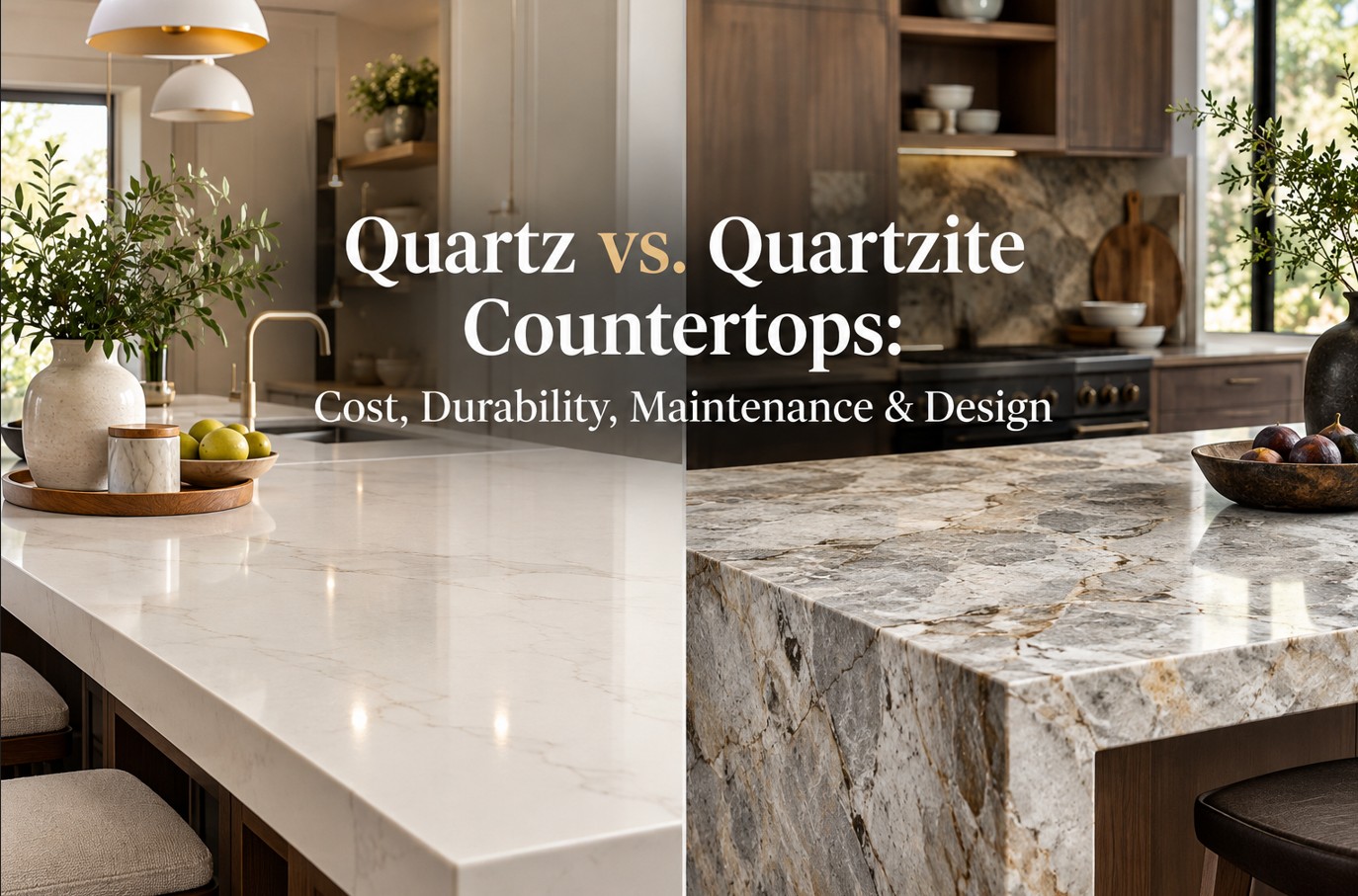
Comparing quartz vs quartzite countertops can be confusing because the names sound similar, yet the materials behave differently. Quartz countertops are engineered surfaces made with mineral content and binding materials, while quartzite is a natural stone formed through geological heat and pressure. Both can look beautiful in a luxury kitchen, but they differ in pattern, maintenance, heat precautions, and how you should evaluate a slab before buying.
This guide explains the practical differences for homeowners planning a kitchen renovation in the United States or Canada. You will learn how each surface handles daily use, what affects price, how to compare samples, which questions to ask fabricators, and how to avoid choosing a material based on appearance alone.
Quartz vs Quartzite Countertops: The Quick Answer
- Choose engineered quartz if you prefer a more consistent pattern, many color options, and a generally straightforward everyday cleaning routine.
- Choose natural quartzite if you value one-of-a-kind mineral movement and natural-stone character, and you are comfortable confirming sealing and care requirements for the exact slab.
- For either material: compare the actual slab, fabrication details, warranty, installation quote, and care instructions from the supplier—not just a small showroom sample.
When comparing quartz vs quartzite countertops, there is no universal winner. Product formulations vary, natural stones vary, and performance depends on the specific product, finish, installation, and care. The right choice balances the look you want with how you cook and maintain your kitchen.
What Is the Difference Between Quartz and Quartzite?
Engineered quartz countertops
Engineered quartz is manufactured from quartz minerals combined with binders, pigments, and other ingredients. This process allows manufacturers to produce a wide range of colors and relatively consistent patterns. Some designs imitate marble or other natural stone; others use uniform colors or fine, controlled veining.
Because engineered quartz is a manufactured product, specifications are brand- and collection-specific. Do not assume every quartz surface has identical heat limits, warranty coverage, or care instructions. Review the technical information for the exact product you are considering.
Natural quartzite countertops
Quartzite is a natural metamorphic rock formed when quartz-rich sandstone is altered by heat and pressure. Its mineral structure, veining, and color variation are created by geology rather than a printed or engineered pattern. Slabs can range from subtle and pale to dramatic, with sweeping veins and contrasting mineral details.
Natural variation is part of the appeal, but it also means two slabs from the same named stone may not look identical. Porosity, hardness, and reaction to cleaners can vary; have the stone identified and ask the fabricator or supplier about its specific care requirements before purchase.
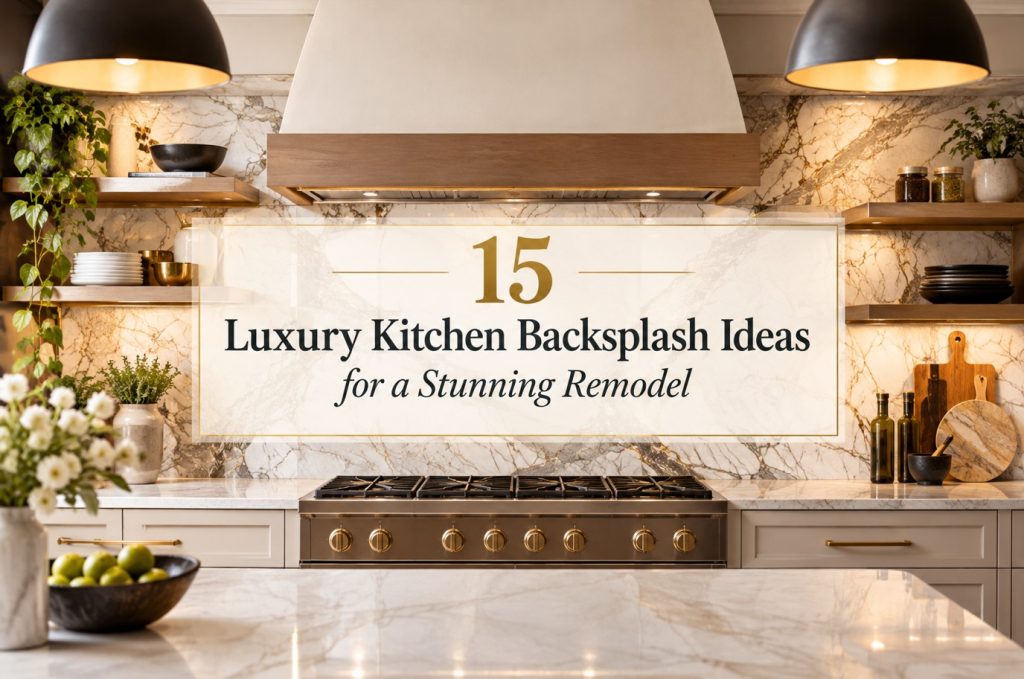
If you are planning a statement backsplash as well as a countertop, consider how the stone pattern will meet the wall surface and cabinetry. This guide offers ideas for coordinating those materials.
Quartz vs. Quartzite: Side-by-Side Comparison
| Factor | Engineered quartz | Natural quartzite |
|---|---|---|
| Material | Manufactured surface containing quartz minerals and binders | Natural metamorphic stone |
| Appearance | Wide color range and more predictable patterning | Natural movement, mineral variation, and one-of-a-kind slabs |
| Daily cleaning | Usually simple cleaning with approved mild products | Use stone-appropriate cleaners; requirements depend on the slab and treatment |
| Sealing | Generally not sealed; verify manufacturer instructions | May need an impregnating sealer; confirm with the stone supplier |
| Heat | Can be damaged by high heat or thermal shock; use trivets | Natural stone tolerates heat differently, but thermal shock and resin treatments can still be concerns; use trivets |
| Pattern consistency | Often more consistent from sample to sample | Natural variation can be substantial; approve the actual slab |
| Repairs | Repairs can be difficult to make invisible and depend on product | Repair options depend on the stone, damage, finish, and fabricator |
| Best reason to choose | Predictability, color choice, and practical routine care | Natural character, depth, and distinctive veining |
Durability: Quartz vs Quartzite Countertops
Durability is not a single score. Scratch resistance, impact resistance, stain resistance, heat performance, and repairability are different properties. A material can perform well in one area and still need care in another.
Scratch and impact resistance
Quartzite is generally a hard natural stone, but the performance of a finished countertop depends on the particular stone and fabrication. Engineered quartz also offers good everyday performance, but it is not indestructible. Heavy impacts at edges, unsupported overhangs, or misuse can damage either material.
Use cutting boards on both surfaces. A cutting board protects the countertop finish and keeps knives from being dulled by the hard surface. Ask the fabricator how corners, sink cutouts, seams, and cantilevers will be supported.
Heat resistance
Do not treat either surface as heatproof. Sudden temperature changes and hot cookware can damage engineered binders, finishes, sealers, or the stone itself. Use trivets or hot pads and follow the product-specific instructions. If you cook frequently with heavy cookware, ask the supplier about the manufacturer’s heat testing and exclusions.
Stain resistance
Engineered quartz is generally nonporous, which can make routine stain prevention simpler, but spills should still be cleaned promptly and product instructions followed. Natural quartzite can vary in porosity, so sealing may be recommended. A sealer can improve resistance to staining, but it does not make a stone completely stainproof.
Before selecting natural stone, ask the supplier to explain the exact slab’s porosity and whether a water-based or solvent-based impregnating product is appropriate. The Natural Stone Institute provides general guidance on cleaning natural stone and choosing non-acidic products.
Quartz vs Quartzite Countertops: Maintenance and Cleaning
Cleaning engineered quartz
For routine cleaning, use a soft cloth and the cleaner approved by the manufacturer. Avoid abrasive pads and harsh chemicals unless the product instructions specifically allow them. Wipe spills promptly, especially strongly pigmented liquids, and use trivets rather than placing hot cookware directly on the surface.
Cleaning natural quartzite
Use a stone-safe, non-acidic cleaner and a soft cloth. Avoid assuming vinegar, lemon-based products, abrasive powders, or general-purpose bathroom cleaners are safe for every natural stone. Ask whether your specific quartzite needs sealing and how to test or maintain the treatment. Sealing schedules vary, so do not rely on a blanket rule that every slab must be resealed at the same interval.
For general care advice, read the Natural Stone Institute’s cleaning and care guidance. Always follow the care instructions for your actual slab and any treatment applied by the fabricator.
Quartz vs Quartzite Countertops: What Affects Cost?
Installed cost depends on more than the material name. Quotes can vary with region, slab availability, thickness, edge profile, sink and cooktop cutouts, backsplash height, seams, delivery access, demolition, and installation complexity. Prices in major metropolitan markets may differ substantially from those in smaller communities, and Canadian quotes may include different taxes, shipping, and currency considerations.
Natural quartzite can carry a premium when a particular slab is rare or has highly sought-after veining. Engineered quartz spans a broad range of price points based on brand, collection, pattern, thickness, and fabrication. Neither material is always cheaper in every market.
To compare estimates fairly, request written quotes that specify the product or slab, finished square footage, edge treatment, cutouts, backsplash, sink installation, removal and disposal of old counters, delivery, taxes, and any additional reinforcement. Ask how seams will be placed and whether the quote includes templating and final installation.
If the countertop is part of a larger renovation, this guide to kitchen remodeling costs can help you organize the other budget categories before making material decisions.
Which Material Looks Better in a Luxury Kitchen?
Choose quartz for controlled, coordinated design
Engineered quartz can be useful when you want a repeatable tone or a pattern that coordinates with cabinetry and backsplash tile. It is also an option when you want the visual suggestion of marble without the same natural variation. View a large sample or full slab because repeating patterns can look different across a wide island than on a small display.
Choose quartzite for natural movement
Quartzite can become the visual anchor of a kitchen, particularly when its veining is carried up a backsplash or wrapped across a waterfall island. The slab’s natural movement should be planned with the cabinet layout, seams, and cutouts. Ask to see the exact slab and, when possible, a digital layout showing how the pattern will be cut.
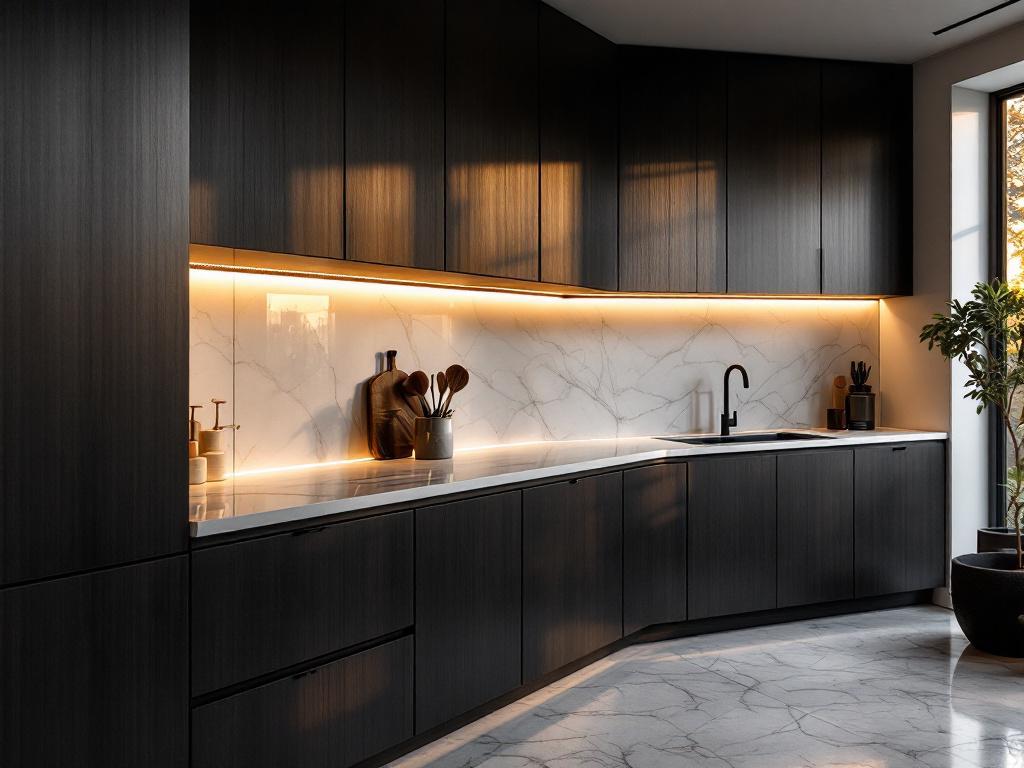
Lighting affects how both materials appear. Glossy finishes and strong directional fixtures can create reflections, while warm or cool LEDs can change the perceived tone of the stone. Review the material under lighting similar to the finished kitchen. For more on this, see the guide to kitchen lighting design.

How to Choose the Right Slab: A Buyer’s Checklist
- Identify the material correctly. Confirm whether the surface is engineered quartz, natural quartzite, or another stone. Ask for the product name and written specifications.
- View the actual slab. A sample may not show the full veining, color range, or natural variation.
- Ask about sealing. For natural stone, get a clear recommendation for the exact slab and treatment rather than a generic promise.
- Confirm heat and chemical limits. Read the manufacturer’s care guide and warranty exclusions.
- Plan seams and pattern direction. Review sink and cooktop cutouts, edge details, and vein alignment before fabrication.
- Get a complete installed quote. Compare the same scope of work across suppliers.
- Check warranty and service. Ask who handles product defects, installation issues, and repairs.
- Coordinate with cabinets and backsplash. View the stone alongside real cabinet and tile samples under the intended lighting.
Common Countertop Buying Mistakes
- Confusing quartz with quartzite: the names are similar, but the materials and care requirements are not the same.
- Choosing from a tiny sample: natural variation and pattern scale are easier to judge on the actual slab.
- Assuming a sealer makes stone stainproof: sealing improves resistance but does not eliminate every risk.
- Placing hot cookware directly on the surface: use trivets and follow the product’s heat guidance.
- Comparing material prices instead of installed quotes: cutouts, edges, delivery, and labor can change the total.
- Ignoring the backsplash: the counter and wall surface should be planned together for pattern, seams, and cleaning.
Frequently Asked Questions About Quartz vs. Quartzite Countertops
1. Is quartz or quartzite better for kitchen countertops?
Neither is best for every home. Engineered quartz often suits homeowners who value consistent patterns and straightforward routine care. Quartzite appeals to those who want natural stone variation and are willing to follow slab-specific maintenance advice. Compare the actual product, not just the category name.
2. Is quartzite more expensive than quartz?
It can be, particularly when the natural slab is rare or the fabrication is complex, but pricing varies by brand, region, availability, and installation details. Request itemized installed quotes for the exact materials and scope.
3. Does quartzite need to be sealed?
Some quartzite slabs benefit from an impregnating sealer, while requirements vary with the stone’s porosity and treatment. Ask the supplier or fabricator to assess the exact slab and explain how to maintain it. Sealing improves stain resistance but does not make stone completely stainproof.
4. Can you put hot pans on quartz countertops?
It is best not to. High heat or sudden temperature changes can damage engineered surfaces. Use a trivet or hot pad and follow the specific manufacturer’s care instructions.
5. Does quartzite stain easily?
Stain susceptibility varies by slab, finish, and sealing treatment. Wipe spills promptly, use stone-safe cleaners, and ask the supplier to explain the porosity and maintenance needs of the exact material.
6. Is quartz harder than quartzite?
Hardness alone does not determine countertop performance. Quartzite is a natural rock rich in quartz, while engineered quartz is a manufactured composite. Scratch, impact, heat, and stain resistance are separate properties; consult the technical information for the specific surface.
7. Which countertop is easier to maintain?
Engineered quartz is generally simpler for routine cleaning because it is typically nonporous and does not usually require sealing. Natural quartzite may require more attention to sealing and stone-safe cleaners. Follow product-specific instructions for either surface.
8. Can quartz look like natural marble or quartzite?
Yes. Many engineered quartz collections are designed with veining inspired by natural stone. The pattern may be more consistent than a natural slab, so view a large sample to judge repetition and scale.
9. Which countertop is better for a waterfall island?
Both can be used, depending on the product, design, and fabrication plan. Natural quartzite can create dramatic continuous veining, while engineered quartz offers coordinated patterns. Review slab layout, seam placement, edge details, support requirements, and installed cost before approval.
10. How do I compare quartz and quartzite countertop quotes in the US or Canada?
Ask each fabricator to identify the exact product and include templating, slab or finished area, cutouts, edge profile, seams, backsplash, delivery, installation, demolition, taxes, and any required support. Confirm the currency and warranty terms, then compare quotes with matching scope.
Final Thoughts
When weighing quartz vs. quartzite countertops, start with how you use your kitchen, the look you want, and the amount of maintenance you are comfortable with. Engineered quartz offers a broad range of controlled designs and typically straightforward care; natural quartzite offers distinctive stone character and requires you to understand the needs of the actual slab.
Before placing an order, view the full slab or a representative large sample, confirm the care requirements in writing, and compare complete installation quotes. Coordinating the countertop with cabinet finishes, backsplash, lighting, and island details will help the finished kitchen feel deliberate and cohesive.