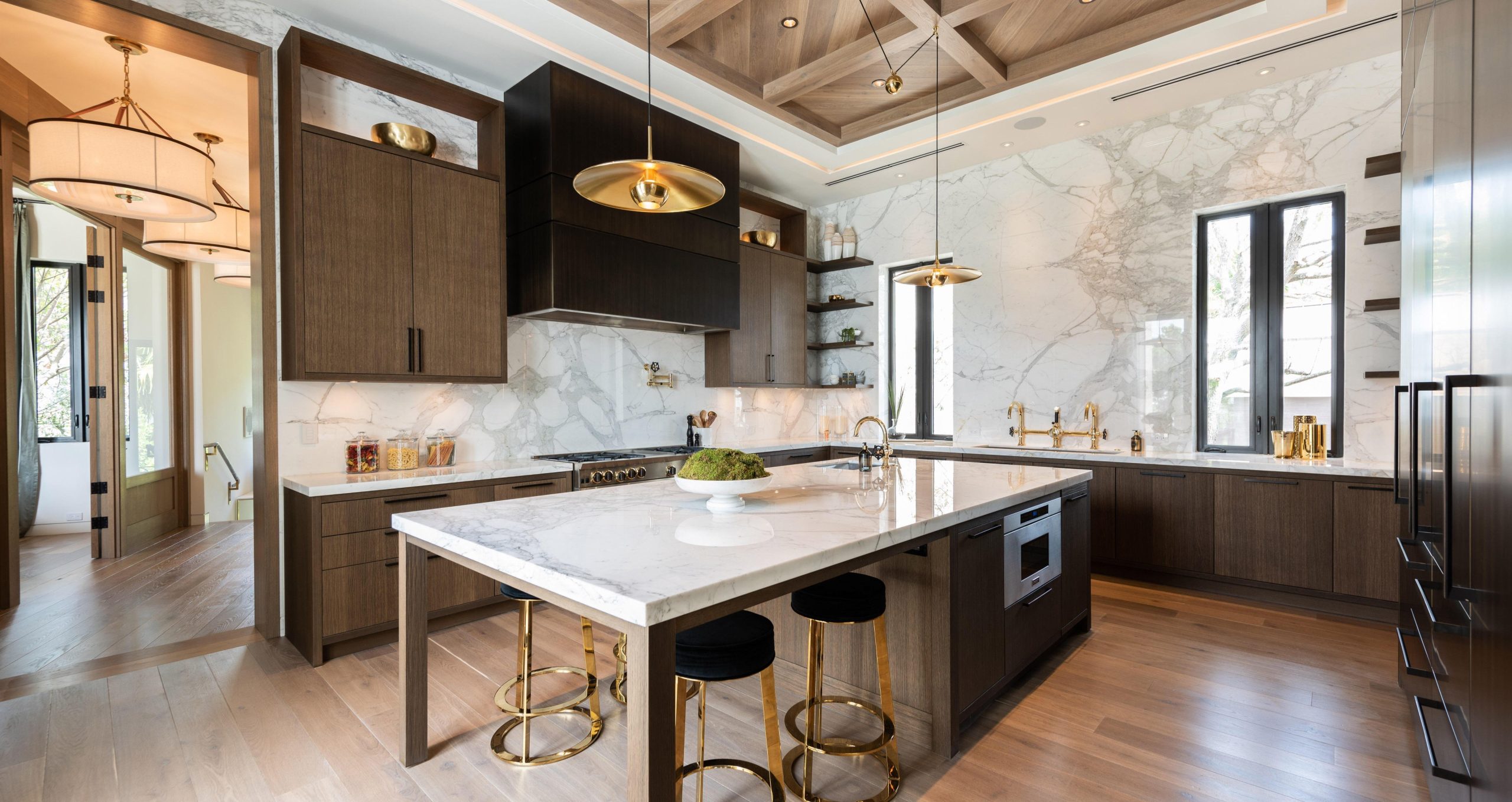
A kitchen can be expensive without feeling luxurious. It can have beautiful countertops, professional appliances, and an impressive island, yet still feel ordinary when the details are not carefully considered.
A truly luxury kitchen is different. Its quality is often found in the details that are easy to overlook: the way cabinetry meets the architecture, how storage is organized, how light moves through the room, how materials work together, and how naturally the entire space supports everyday life.
The best high-end kitchens do not simply display expensive products. They create a sense of balance, precision, comfort, and permanence.
At Kasa Di Lusso, this philosophy begins with treating the kitchen as an architectural space rather than simply a collection of cabinets and appliances. Every element should have a purpose, and every detail should contribute to the experience of the room.
So, what actually separates a standard kitchen from a truly luxurious one?
Here are 10 details that make the difference.
1- Custom Cabinetry Designed for the Space
One of the clearest differences between a standard kitchen and a luxury kitchen is cabinetry designed specifically for the room.
Stock and semi-custom cabinets are generally built around predetermined dimensions. Custom cabinetry works in the opposite direction: the cabinetry is designed around the architecture, proportions, storage requirements, and lifestyle of the homeowner.
This allows designers to use the available space more intelligently, from floor-to-ceiling storage to integrated appliances, hidden compartments, specialized drawers, and precisely aligned doors.
In a high-end kitchen, even the areas that are rarely seen are considered.
Drawer construction, hardware, hinges, interior finishes, reveals, panel alignment, and the way cabinetry meets walls and ceilings all contribute to the final result.
The goal is not simply to have more storage. It is to make storage feel effortless and integrated into the architecture.
2- Exceptional Materials With a Purpose
Luxury is not created by using the most expensive material available. It comes from selecting materials that are appropriate to the architecture, lifestyle, and intended experience of the kitchen.
Natural stone, carefully selected wood veneers, refined metals, glass, porcelain, and other premium surfaces can create depth and character when they are used with restraint.
The strongest luxury kitchen design schemes often use a limited number of materials and allow each one to make an impact.
For example, a warm wood cabinetry system can be paired with a sophisticated stone surface, while subtle metal details introduce contrast without overwhelming the composition.
Material selection should also consider durability.
A beautiful surface that cannot withstand everyday cooking is not necessarily a luxury choice. True quality combines visual appeal with performance.
3- Proportion and Architectural Balance
One of the most underestimated elements of high-end design is proportion.
A kitchen may contain beautiful cabinets and expensive appliances, but if the island is too large, the circulation is too tight, or the cabinetry does not relate properly to the ceiling height, the space will never feel completely resolved.
In an exceptional kitchen, the island, cabinetry, countertops, lighting, windows, doors, and surrounding architecture work together as one composition.
This is one reason why contemporary luxury kitchen design often begins before cabinetry is finalized. The kitchen needs to respond to the architecture of the home rather than being inserted into an already finished space.
Good proportions create a feeling that is difficult to describe but immediately noticeable.
Nothing appears too large, too small, too crowded, or out of place.
4- Intelligent Kitchen Zones and Workflow
A beautiful kitchen should also work beautifully.
Instead of thinking only about the traditional kitchen triangle, modern kitchen planning increasingly focuses on functional zones.
These may include:
- A preparation zone
- A cooking zone
- A cleaning zone
- A food storage zone
- A refrigeration zone
- A serving and entertaining zone
- A beverage or coffee station
- A secondary pantry or butler’s pantry
This approach is especially valuable in larger homes where several people may be using the kitchen at the same time.
The best custom kitchen designs reduce unnecessary movement. Ingredients, cookware, appliances, sinks, refrigerators, and preparation surfaces are positioned according to how the homeowner actually cooks and lives.
That is where luxury becomes practical.
5- Appliances That Are Integrated Into the Design
Professional-grade appliances can certainly contribute to a high-end kitchen, but simply purchasing expensive appliances does not automatically create a sophisticated space.
Integration matters.
Refrigeration can be concealed behind custom panels. Ovens can be positioned ergonomically. Small appliances can disappear into appliance garages or dedicated storage areas. Ventilation can be carefully integrated into the overall architecture.
The result is a kitchen where technology supports the design instead of dominating it.
This is particularly important in open-plan homes, where the kitchen is visible from living and dining areas.
A well-designed high-end kitchen should feel cohesive even when the appliances are not being used.
6- Lighting Designed in Layers
Lighting is one of the most powerful tools in kitchen design, yet it is frequently treated as an afterthought.
A sophisticated kitchen typically benefits from several layers of lighting:
Ambient lighting provides general illumination.
Task lighting focuses on preparation, cooking, and cleaning areas.
Accent lighting highlights architectural features, cabinetry, artwork, or material details.
Decorative lighting can introduce personality and create a focal point above an island or dining area.
The color temperature, placement, intensity, and control of these layers can dramatically change the atmosphere of the room.
During the day, natural light may define the character of the space. At night, carefully controlled lighting can make the same room feel intimate, warm, and sophisticated.
7- Hardware and Details That Feel Deliberate
Sometimes the smallest details have the greatest visual impact.
Cabinet handles, hinges, drawer runners, faucets, sinks, electrical outlets, and even the spacing between cabinet doors can influence how refined a kitchen feels.
In a bespoke kitchen, hardware is selected as part of the overall design language.
Some kitchens benefit from discreet integrated pulls. Others may use sculptural metal handles as a deliberate accent.
The important point is consistency.
A refined kitchen does not usually contain random details competing for attention. Materials, hardware, cabinetry, appliances, and lighting should speak the same visual language.
8- Hidden Storage and Visual Calm
One of the defining characteristics of contemporary luxury interiors is the ability to conceal complexity.
A kitchen may require an enormous amount of equipment, cookware, food, cleaning products, and everyday objects. The challenge is making all of those necessities accessible without creating visual clutter.
This is where intelligent storage becomes essential.
Deep drawers can organize cookware. Vertical storage can accommodate trays and cutting boards. Specialized inserts can organize utensils. Integrated appliance storage can keep counters clear.
In some homes, a butler’s pantry or secondary preparation kitchen can handle the functional work while the main kitchen remains calm and presentation-ready.
This idea of an “invisible kitchen” has become increasingly relevant as open-plan living continues to connect kitchens with dining and living spaces.
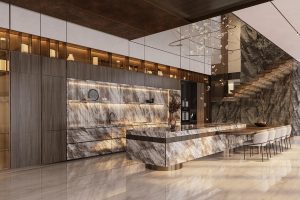
9- Craftsmanship You Can See—and Feel
Luxury is often tactile.
Open a drawer and notice how smoothly it moves. Close a cabinet door and feel how precisely it aligns. Run your hand across a stone edge or wood surface.
These experiences communicate quality more effectively than a price tag ever could.
The difference between standard and premium cabinetry can appear in construction details that are not immediately visible, including joinery, drawer boxes, hardware, finishes, and precise installation.
A truly bespoke kitchen is built around the individual project rather than adapted from a predetermined template.
That precision is part of what makes a space feel permanent rather than temporary.
10- A Design That Belongs to the Home
Perhaps the most important distinction is that a great kitchen should not look like it was copied from a showroom.
It should belong to the architecture and to the people who live there.
A contemporary home may call for restrained cabinetry, integrated appliances, natural stone, and minimal hardware. A traditional residence may require more detailed millwork and a different material vocabulary.
The best modern luxury kitchen is not necessarily the one with the most dramatic finishes. It is the one where every decision feels intentional.
That is what creates timelessness.
What are the key features of a luxury kitchen?
The key features of a luxury kitchen typically include custom cabinetry, premium materials, professional-grade appliances, intelligent storage, carefully planned lighting, refined hardware, efficient work zones, and architectural integration.
However, the most important feature is not any individual product.
It is the relationship between all of these elements.
A kitchen becomes genuinely high-end when its design responds to the homeowner’s lifestyle, the architecture of the property, and the way the space will be used every day.
Custom cabinetry, for example, becomes more valuable when it solves a real storage problem. Premium stone becomes more meaningful when its scale, veining, and finish complement the architecture. Professional appliances become more useful when their location improves workflow.
Luxury is therefore less about adding more and more, and more about making better decisions.
What makes a kitchen look luxurious?
A kitchen looks luxurious when it feels intentional, balanced, and visually calm.
Several factors can create that impression:
Consistent proportions
Cabinet doors, drawers, islands, countertops, and architectural openings should relate to one another.
A restrained material palette
Rather than using many competing finishes, high-end interiors often use a smaller number of materials with greater attention to texture and quality.
Seamless cabinetry
Full-height cabinetry, integrated appliances, consistent reveals, and carefully resolved corners can make the room feel architectural.
Quality lighting
Layered lighting can emphasize textures and create different moods throughout the day.
Visual simplicity
A sophisticated kitchen often hides more than it displays.
This is why concealed appliances, integrated storage, and clean cabinetry are increasingly popular in contemporary interiors.
The objective is not to make the kitchen empty. It is to make every visible element feel purposeful.
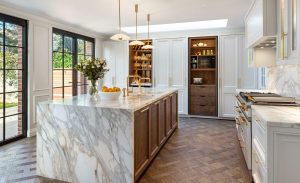
What are the different sections of a professional kitchen?
The different sections of a professional-style residential kitchen are usually organized around specific tasks rather than simply around appliances.
Preparation Zone
This is where ingredients are washed, cut, measured, and assembled.
It should have generous counter space, convenient access to knives and utensils, and easy access to refrigeration and food storage.
Cooking Zone
The cooking zone typically includes the range or cooktop, ovens, ventilation, cookware storage, and heat-resistant work surfaces.
Its location should support an efficient workflow between preparation and serving.
Cleaning Zone
This generally includes the primary sink, dishwasher, waste and recycling systems, and cleaning-product storage.
Keeping these functions together can make cleanup significantly easier.
Storage Zone
This includes pantry cabinets, refrigerators, freezers, dry-food storage, and specialized cabinetry.
In a large luxury kitchen, storage may be distributed across several dedicated areas.
Serving and Social Zone
The island often serves as the transition between cooking and socializing.
Depending on the home’s lifestyle, this area may include seating, a beverage station, wine storage, or a dedicated coffee area.
Secondary Kitchen or Butler’s Pantry
For larger residences, a butler’s pantry or secondary kitchen can provide additional preparation and storage capacity.
This allows the primary kitchen to remain visually clean while still supporting serious cooking and entertaining.
Modern kitchen planning increasingly favors this type of zone-based organization because it accommodates multiple users and different activities more naturally than a rigid one-size-fits-all layout.
What makes a kitchen elegant?
Elegance comes from restraint.
An elegant kitchen does not need to announce its price. Instead, it creates a sense of harmony through proportion, material selection, craftsmanship, lighting, and simplicity.
Natural materials can add warmth. Precise cabinetry can create architectural order. Integrated appliances can reduce visual noise. Carefully selected hardware can provide subtle contrast.
Most importantly, an elegant kitchen should feel comfortable.
There should be enough space to move naturally, enough storage to keep surfaces organized, and enough personality to make the room feel connected to the people who use it.
This is why the most successful luxury kitchen design ideas often focus as much on what is removed as on what is added.
Luxury Is in the Details
The difference between a standard kitchen and a high-end kitchen is rarely one dramatic feature.
It is the accumulation of hundreds of decisions.
The width of a drawer.
The alignment of a cabinet.
The transition between stone surfaces.
The position of a light.
The way an appliance disappears into cabinetry.
The amount of space around an island.
The feel of a handle.
The sound of a drawer closing.
Together, these details create an environment that feels considered rather than assembled.
That is the real meaning of bespoke design.
How Kasa Di Lusso Can Help You Create a Luxury Kitchen
At Kasa Di Lusso, the kitchen is approached as an architectural space rather than simply a cabinetry package.
The company’s design philosophy is centered on creating kitchens where form, function, materiality, and craftsmanship work together. Its approach starts from the inside out, allowing practical requirements to shape the architectural and visual decisions of the room.
Kasa Di Lusso focuses on custom kitchens and cabinetry with Italian design direction, precision manufacturing, and German and Austrian hardware, serving projects across Canada and the United States.
For a homeowner, that means the conversation can begin with a simple question:
How should your kitchen work for you?
From there, the design can consider the architecture of the home, cooking habits, storage requirements, entertaining style, materials, appliances, lighting, and the visual relationship between the kitchen and the rest of the living space.
The result is not simply a collection of premium cabinets.
It is a kitchen designed specifically for the way you live.
Frequently Asked Questions About Luxury Kitchens
1- What is considered a luxury kitchen?
A luxury kitchen is a highly customized space that combines premium materials, quality craftsmanship, intelligent planning, refined cabinetry, advanced appliances, and architectural design. Its defining characteristic is not simply cost, but how well the space responds to the homeowner’s needs and the architecture of the home.
2- Are custom cabinets worth it for a luxury kitchen?
Yes. Custom cabinets allow the kitchen to be designed around the exact dimensions of the room, storage requirements, appliances, ceiling height, and lifestyle of the homeowner. They can also create a more seamless architectural appearance than standard cabinetry.
3- What materials are best for a high-end kitchen?
There is no single best material for every project. Natural stone, premium wood veneers, porcelain, glass, and refined metals can all be excellent choices when selected according to durability, maintenance requirements, architecture, and overall design.
4- What is the most important part of luxury kitchen design?
Planning is arguably the most important part. A beautiful kitchen can still be frustrating if the layout, storage, circulation, lighting, and appliance placement are poorly resolved. The strongest designs balance aesthetics with everyday functionality.
5- How can I make my kitchen look more luxurious?
Start with the fundamentals: improve proportions, reduce visual clutter, upgrade lighting, choose a restrained material palette, integrate appliances where appropriate, and invest in well-designed cabinetry. Luxury is usually created through consistency and detail rather than simply adding expensive finishes.
Final Thoughts
A truly luxurious kitchen is not defined by how much it costs or how many premium products it contains.
It is defined by how naturally everything works together.
The cabinetry fits the architecture. The materials complement one another. The lighting changes with the time of day. Storage is exactly where it needs to be. Appliances perform without disrupting the visual composition. And the entire space feels as though it was designed specifically for the people who live there.
That is the difference between a kitchen that is expensive and a kitchen that is genuinely exceptional.