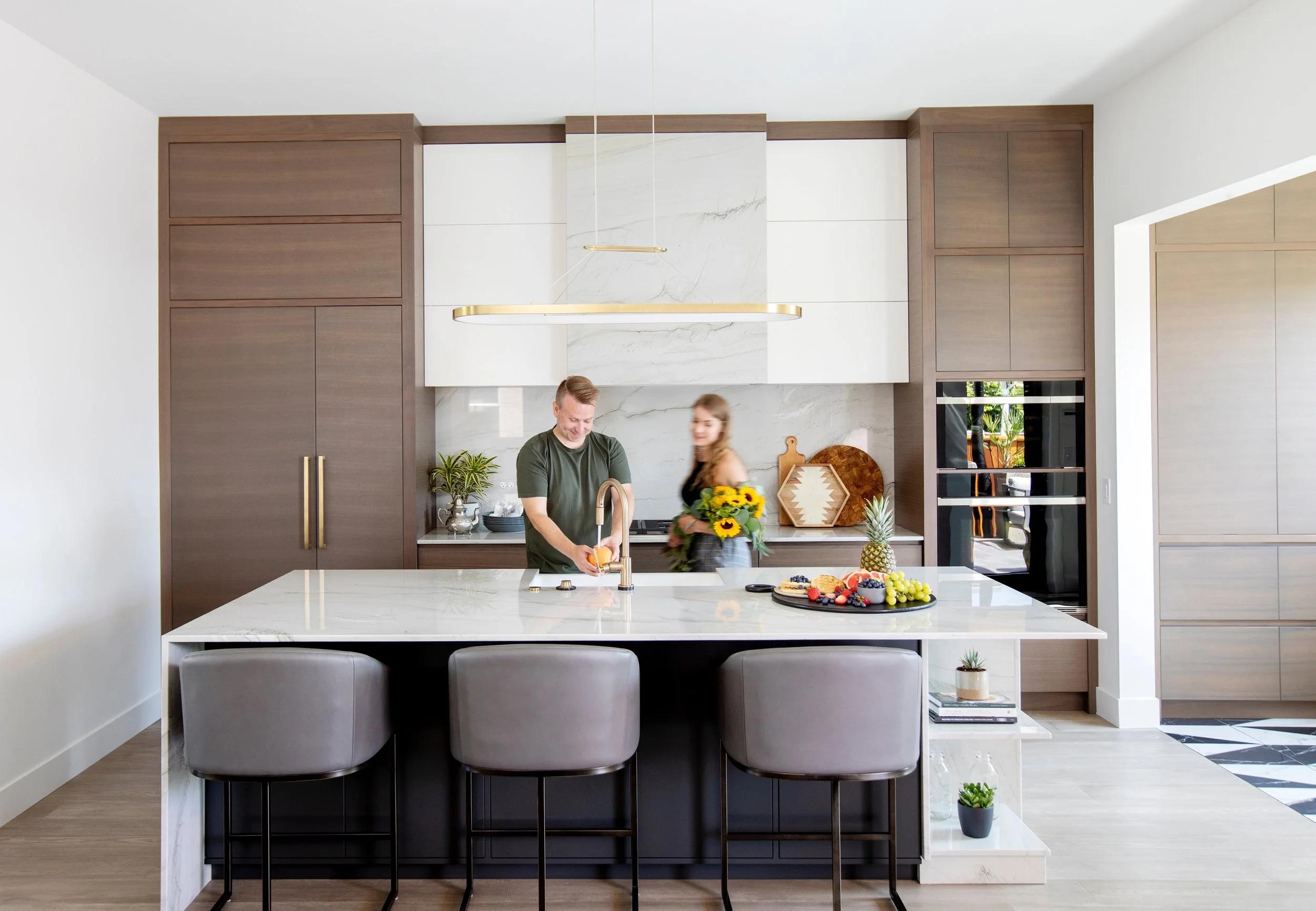
A luxury kitchen is not simply a kitchen with an expensive countertop, oversized island, or a row of impressive appliances. In a truly considered space, every element works together: the architecture, cabinetry, materials, storage, lighting, hardware, proportions, and the way people move through the room. That is where custom luxury kitchen cabinets become more than a storage solution. They become part of the architecture of the home.
For homeowners in the United States and Canada, the decision to invest in a high-end kitchen often comes with a much larger question: what actually separates a luxury kitchen from an ordinary custom kitchen? The answer is rarely a single material or brand. It comes down to how carefully the entire system is designed, manufactured, installed, and integrated into the surrounding space.
At Kasa Di Lusso, this philosophy is reflected in an architectural approach to kitchen design. The company describes its kitchens as bespoke systems shaped around proportion, performance, materials, and long-term use, rather than as off-the-shelf or modular cabinetry.
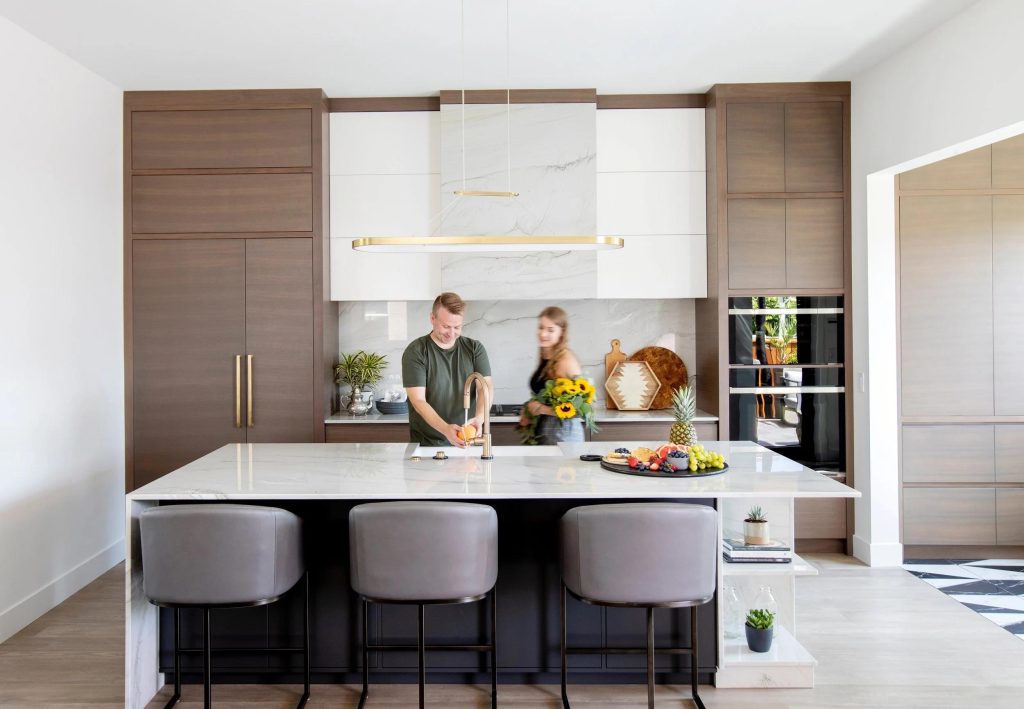
What Makes Custom Luxury Kitchen Cabinets Different?
The biggest distinction between standard cabinetry and custom luxury kitchen cabinets is the degree of control available during the design process. Standard cabinets generally work within predetermined dimensions, finishes, storage configurations, and construction methods. Custom cabinetry begins with the individual space and allows the cabinet system to respond to the architecture instead of forcing the architecture to accommodate a fixed product.
That difference becomes especially important in high-end homes, where kitchens often have unusual dimensions, large windows, architectural columns, integrated appliances, generous islands, or open-plan connections to dining and living spaces. Custom cabinetry can be developed around those conditions so that storage, appliances, lighting, and circulation feel intentional rather than assembled.
Quality also extends beyond what can be seen from across the room. Cabinet interiors, drawer construction, hinges, runners, lift mechanisms, adjustment systems, and installation details all contribute to the experience of using a kitchen every day. Kasa Di Lusso, for example, specifies European mechanical systems according to factors such as use, load requirements, ergonomics, and long-term serviceability.
Luxury Kitchen Cabinets Design: Where Architecture Meets Function
Luxury Kitchen Cabinets Design should begin with the way the kitchen will actually be used. The most beautiful kitchen can become frustrating if the refrigerator, sink, cooktop, storage, preparation surfaces, and frequently used accessories are positioned without considering movement and everyday routines.
An architectural approach starts from the inside out. Storage requirements, appliance locations, circulation, sightlines, lighting, and working zones are considered before the visual language of the cabinetry is finalized. This creates a kitchen that feels calm because the practical elements have already been resolved within the design.
This is particularly important in open-concept homes across North America, where the kitchen is visible from multiple areas of the house. Cabinetry needs to look refined from the living room as well as from inside the kitchen, which is why integrated appliances, consistent material transitions, concealed storage, and carefully controlled proportions can have such a significant impact.
Kasa Di Lusso describes this approach as “Function Shaped by Design,” with practical needs informing architectural decisions rather than treating aesthetics and functionality as separate stages.
Modern Luxury Kitchen Cabinets: Clean Lines Without Feeling Cold
Modern luxury kitchen cabinets are often associated with flat panels, minimal hardware, concealed appliances, large islands, and restrained color palettes. But modern design does not necessarily mean a completely stark or sterile interior.
The current direction of high-end kitchen design increasingly combines architectural simplicity with warmer materials and carefully selected textures. Natural wood, stone, muted finishes, integrated lighting, and subtle variations in texture can soften a minimalist kitchen without compromising its clean geometry.
The goal is not to add more decorative elements simply to make a kitchen appear expensive. In a sophisticated space, luxury can come from restraint: precise reveals, balanced proportions, carefully aligned doors, consistent finishes, and hardware that disappears into the overall composition.
This philosophy closely matches Kasa Di Lusso’s stated emphasis on modern European design principles, warm transitional luxury, clarity, and restraint.
Luxury Kitchen Cabinets Brands: What Should You Look For?
When researching luxury kitchen cabinets brands, homeowners often begin with the name on the cabinet door. Brand reputation can matter, but it should not be the only consideration.
A high-end cabinetry system should be evaluated according to its construction, material quality, customization capabilities, hardware, finishing standards, engineering, installation process, and ability to support the project over time. Two products can appear similar in photographs while performing very differently after years of daily use.
European hardware is another area worth examining. Premium systems from companies such as Blum and Hettich are commonly specified in high-end cabinetry because drawer runners, hinges, lift mechanisms, and internal fittings directly affect how the kitchen feels every day. Kasa Di Lusso identifies European hardware systems as part of its cabinetry specification approach.
For homeowners comparing luxury cabinetry brands, the better question is therefore not simply “Which brand is the most expensive?” but “Which cabinetry system offers the right combination of design freedom, construction quality, hardware, service, and long-term performance for this project?”

Best High-End Kitchen Cabinets Brands: How Should You Compare Them?
There is no single specification that makes one cabinetry brand universally appropriate for every luxury home. A better comparison begins with the project itself. A contemporary Vancouver residence, a traditional home in Seattle, and a large custom-built property in California may require very different cabinetry solutions.
Start by examining how much customization the manufacturer actually offers. Some companies provide a limited selection of cabinet sizes and finishes, while others manufacture each project according to architectural drawings and individual specifications. That distinction can significantly affect the final result.
It is also worth examining the manufacturing process, hardware systems, finish quality, installation support, warranty structure, and communication between designer, manufacturer, contractor, and homeowner. A luxury kitchen is a coordinated construction project, not simply a collection of expensive products.
Kasa Di Lusso positions itself around this integrated model, combining design direction, project-specific manufacturing, technical coordination, and installation support depending on the scope of the project. The company states that it serves qualified residential and development projects across both Canada and the United States.
Luxury Kitchen Cabinets Colors: Which Finishes Work Best?
Color can completely change the character of a luxury kitchen, but there is no single “luxury” color. White, warm wood, charcoal, muted green, taupe, cream, black, and natural stone-inspired tones can all work when they are integrated properly with the architecture.
The most enduring kitchens usually avoid choosing cabinet color in isolation. The cabinetry should relate to the flooring, countertop, backsplash, walls, appliances, hardware, natural light, and adjacent rooms. A color that looks sophisticated in a showroom may feel very different in a north-facing room with limited daylight.
Warm neutrals and natural wood can create a more residential atmosphere, while darker cabinetry can produce a dramatic architectural effect. Light cabinetry can make a space feel more open, but careful detailing is still necessary to prevent the kitchen from looking generic.
For homeowners considering modern luxury kitchen cabinets, the finish should therefore be selected as part of the complete material palette rather than as an independent design decision.
Custom Luxury Kitchen Cabinets Reviews: What Should Homeowners Look For?
When reading custom luxury kitchen cabinets reviews, it is easy to focus on photographs and comments about appearance. Those details are useful, but long-term ownership tells a much more complete story.
Look for feedback about communication, accuracy of measurements, installation, drawer and door performance, finish durability, problem resolution, and whether the finished kitchen matched the original design. A beautiful showroom photograph cannot tell you how well a cabinet system performs after thousands of openings and closings.
It is also useful to distinguish between reviews of the cabinet manufacturer and reviews of the complete project. Installation quality, site conditions, architectural coordination, and contractor workmanship can all influence the final result.
For a high-value renovation, homeowners should ideally ask to see completed projects and discuss the process directly with the design or cabinetry team rather than relying exclusively on online reviews.
Why Custom Cabinetry Matters in High-End Homes
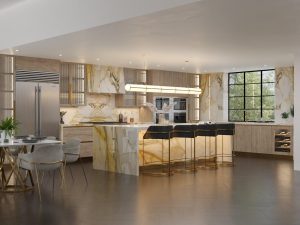
The value of custom cabinetry becomes particularly clear when the kitchen is treated as part of the home’s architecture. Instead of seeing cabinets as individual boxes placed against walls, the entire system can be designed as one continuous composition.
This allows appliances to disappear behind matching panels, storage to occupy otherwise awkward spaces, lighting to be integrated into the cabinetry, and islands to become architectural elements rather than simply large pieces of furniture.
The result is a kitchen that can remain visually relevant for many years because its design is based on proportion, material quality, functionality, and craftsmanship rather than a short-lived trend. This idea of long-term relevance is central to Kasa Di Lusso’s stated design philosophy.
How to Choose the Right Luxury Kitchen Cabinets for Your Home
Before selecting cabinetry, homeowners should establish how they use the kitchen, how much storage they need, which appliances need to be integrated, and how the kitchen connects to the rest of the home. These practical questions provide the foundation for the design.
The next step is to compare materials, construction, hardware, finishes, customization options, manufacturing capabilities, installation, and service. Asking these questions early can prevent expensive compromises later in the project.
Ultimately, the right luxury cabinetry is not necessarily the one with the longest list of premium features. It is the system that resolves the specific requirements of the home with precision, performs reliably, and creates a visual relationship between the kitchen and the architecture around it.
For homeowners in the United States and Canada, this is particularly important when working on a high-end renovation or new-build project where cabinetry represents a significant part of both the visual identity and investment of the kitchen. Kasa Di Lusso currently offers bespoke cabinetry and kitchen projects across Canada and the United States through an appointment-based process.
Final Thoughts
True luxury in a kitchen is rarely about adding more. It is about making better decisions at every stage, from the first architectural drawing to the final adjustment of a drawer. Custom luxury kitchen cabinets can transform a kitchen when they are designed around the space, manufactured with precision, fitted with reliable systems, and finished with materials that make sense for the home.
For homeowners comparing luxury kitchen cabinets, the most important questions are therefore about design freedom, craftsmanship, functionality, materials, hardware, installation, and long-term performance. When those elements work together, the kitchen becomes more than a collection of cabinets—it becomes an integral part of the architecture and one of the most meaningful spaces in the home.